
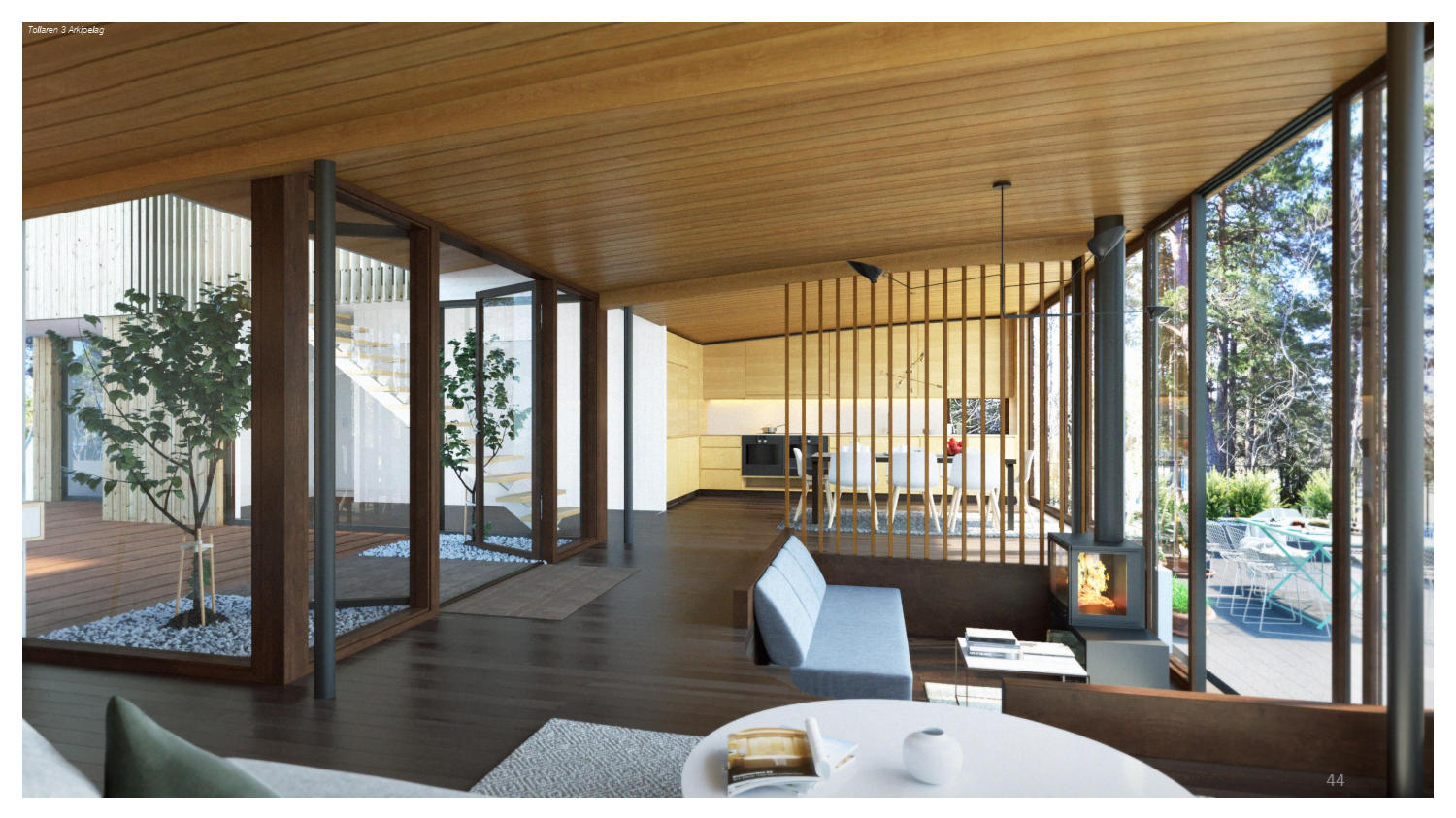
Designing in depth
Most interiors are designed as thin rooms — flat planes wrapped around a volume. We design in depth instead: treating the interior as a sequence of layered spaces, where you move from one zone to another through thresholds rather than doors in a wall. A deep interior reveals itself gradually, holding light, shadow and discovery the way a shallow one cannot. It is the difference between a room you take in at a glance and a space you inhabit and keep finding.
Inhabiting the thickness — poché
In architectural drawing, poché is the solid mass of wall and structure — the part you blacken in on a plan. Most design treats that mass as dead material to be made as thin as possible. We treat it as space waiting to be inhabited. By thickening the envelope where it matters, the wall stops being a boundary and becomes a place: deep enough to hold a window seat, a reading nook, concealed storage, a passage or a stair. This is one of architecture’s oldest and richest moves, and it turns leftover structure into some of the most loved space in a building.
Structure brought into the room
We design the structural system as part of the interior, not something to be hidden behind a lining. A column, a beam, a load-bearing wall or an exposed timber frame can order a space, mark a threshold and give a room its rhythm and material honesty. Integrating structure into the interior envelope this way removes redundant layers of cladding — which is leaner, more sustainable and more truthful — and lets the way a building stands up become part of how it feels to be inside it.
Alcoves and openings
Within that thickened, structured envelope, the detail work begins: carving alcoves, niches and recesses that give a space intimacy and scale, and shaping the openings between spaces and to the outside. An opening is never just a hole — its depth, its frame and its position decide how light enters, what view is offered and how one space hands you on to the next. Designed with care, a deep window reveal or a framed threshold does more for how a room feels than any amount of applied decoration.