An international competition proposal for a museum extension housing Norway’s recovered Viking ships

| Project Location | Oslo, Norway |
| Project Type | Cultural building, museum extension, archaeological display, Viking heritage, international open competition |
| Project Description | An international open competition entry for the extension of the Museum of the Viking Age in Oslo, housing the recovered Viking ships and creating a new cultural destination on the Bygdøy peninsula. |
| Architect | UFO Architecture |
| Competition | Museum of the Viking Age, Oslo — international open architectural competition |
| Project Status | International open competition entry |
| Project Duration | — |
| Programme | Museum extension, Viking ship halls, archaeological display spaces, public foyers, visitor facilities, learning spaces, cultural programme and landscape connections |
| Design Focus | Museum extension, Viking heritage, archaeological display, cultural architecture, Oslo waterfront, Bygdøy peninsula, public realm and landscape integration |
| Museum Strategy | The proposal creates new spatial conditions for the recovered Viking ships, balancing conservation, display, visitor movement and the scale of the archaeological artefacts. |
| Heritage Strategy | The design responds to the exceptional status of the Oseberg, Gokstad and Tune ships, treating the museum extension as both a protective environment and a public cultural experience. |
| Urban Strategy | The project positions the museum as a cultural destination on the Bygdøy peninsula, connecting the expanded museum programme to Oslo’s wider public and landscape context. |
| Environmental Strategy | The proposal explores a compact and climate-conscious museum extension, integrating controlled exhibition conditions, daylight strategy, visitor comfort and landscape-sensitive siting. |
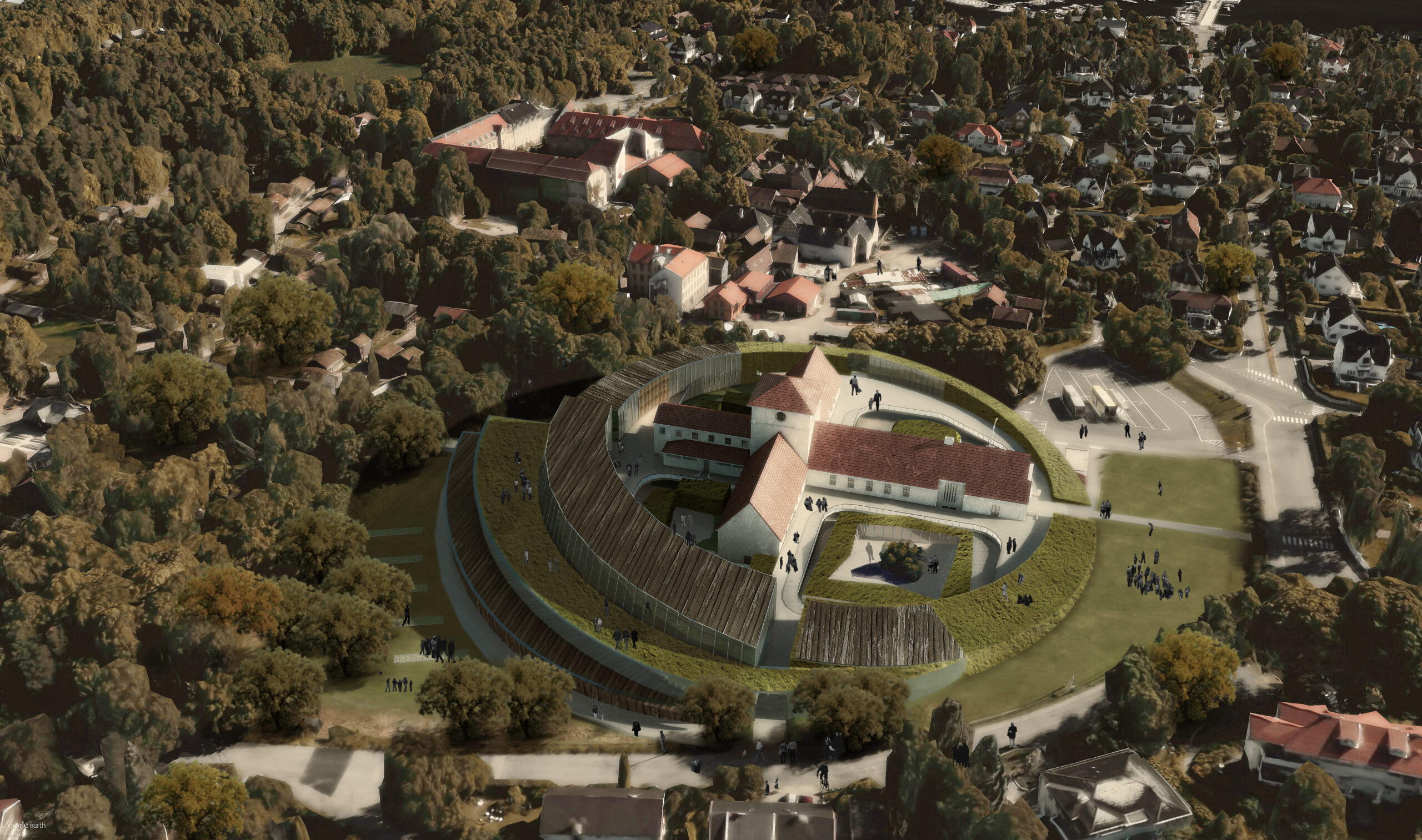
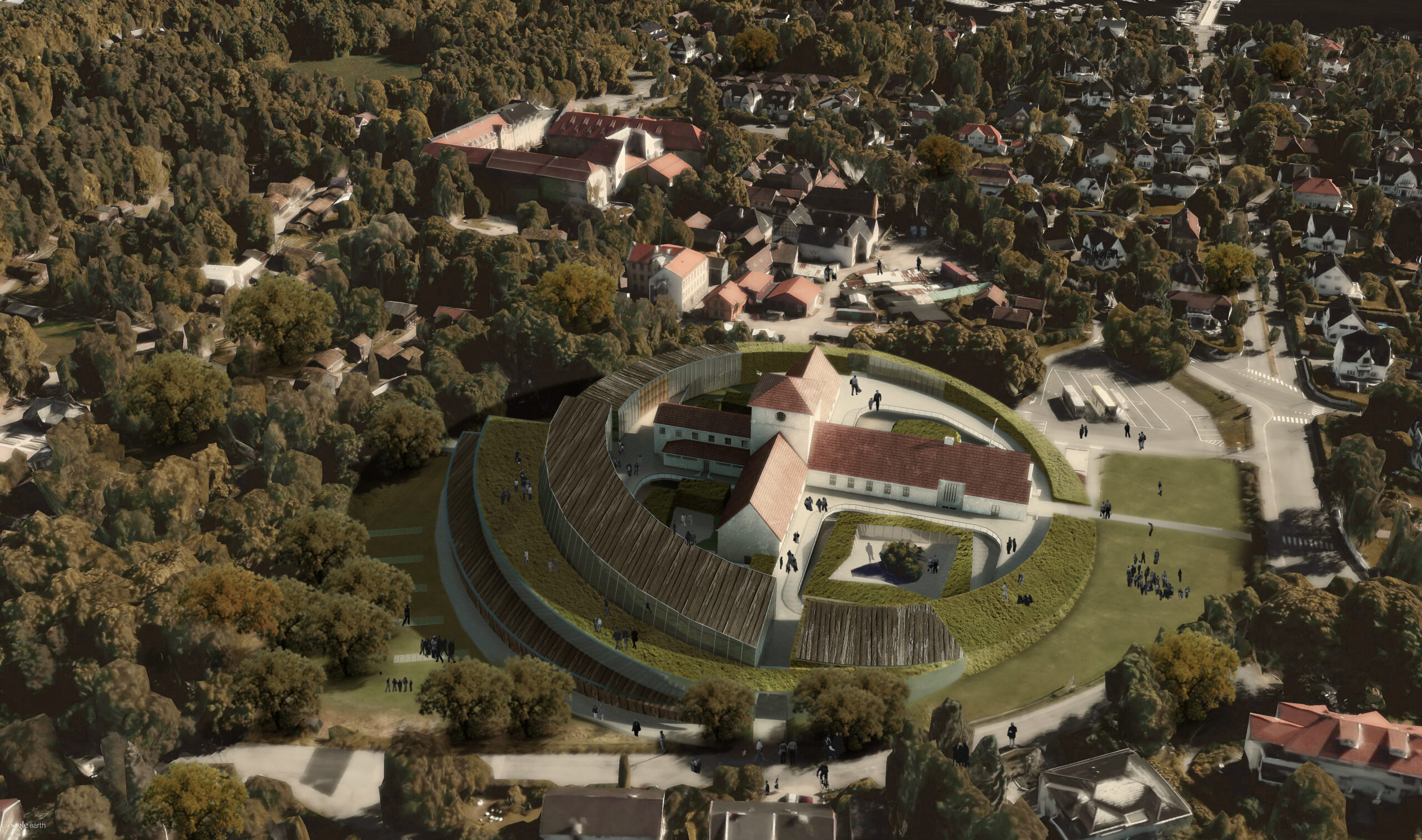
Viking Museum is UFO Architecture's international open competition entry for the extension of the Museum of the Viking Age in Oslo, Norway. The project proposes a new cultural building to house the recovered Viking ships and expand the public programme of one of Scandinavia's most significant archaeological collections.
The proposal responds to the exceptional nature of the existing artefacts: the Oseberg, Gokstad and Tune ships. These are not conventional museum objects, but full-scale vessels with a powerful physical, historical and cultural presence. The design therefore focuses on creating spatial conditions that allow the ships to be experienced with both intimacy and civic significance.
The museum extension balances two different scales. On one hand, the building must provide carefully controlled exhibition environments for fragile archaeological artefacts. On the other, it must operate as a public cultural destination for Oslo, capable of welcoming large numbers of visitors while maintaining a clear and memorable architectural identity.
The visitor experience is organised around the encounter with the ships. Circulation, gallery sequence, viewing positions and public foyers are developed to allow the vessels to be seen from multiple perspectives, revealing their construction, scale and cultural meaning without reducing them to isolated display objects.
The project also addresses the relationship between museum and landscape. Located on the Bygdøy peninsula, the extension is conceived as part of a wider cultural and natural setting. The building connects archaeological display with the landscape character of the site, creating a museum experience that extends beyond the interior galleries.
Public space plays an important role in the proposal. Foyers, gathering areas, learning spaces and visitor facilities are treated as part of the museum’s civic life, allowing the building to support education, tourism, research and everyday public engagement.
Environmental performance and conservation requirements are developed together. The design considers controlled daylight, stable interior conditions, compact organisation and landscape-sensitive siting as part of a museum strategy that protects the collection while creating a generous visitor environment.
Viking Museum reflects UFO Architecture's wider interest in cultural buildings, heritage environments and the integration of architecture with landscape. The project proposes a museum extension where archaeological preservation, public experience and civic identity are brought together in a coherent architectural framework.