an urban campus strategy for Tenchuang HQ

| Project Location | Shenzhen Bay, Shenzhen, China |
| Project Type | Urban design, headquarters masterplan, mixed-use campus, public realm, landscape strategy |
| Project Description | Urban design proposal for Tenchuang HQ in Shenzhen Bay, developing the site strategy, public realm, landscape structure, programme distribution and relationship between the headquarters campus and the surrounding city. |
| Client | Tenchuang |
| Architect | UFO Architecture |
| UFO Architecture Team | Eddy He, Jonas Lundberg, Anna Liuzzo, Daniel Fagerberg |
| Project Partners | Charlotte Erdegard Arkitekter (CEA), Andrew Grant |
| Related Project | Tenchuang Towers — headquarters buildings and hotel proposal |
| Project Status | Invited competition proposal |
| Project Year | 2019 |
| Project Size | 241,400 sqm headquarters development |
| Design Focus | Urban campus, headquarters masterplanning, Shenzhen Bay, public realm, podium landscape, mixed-use programme, workplace urbanism, ecological design, city interface |
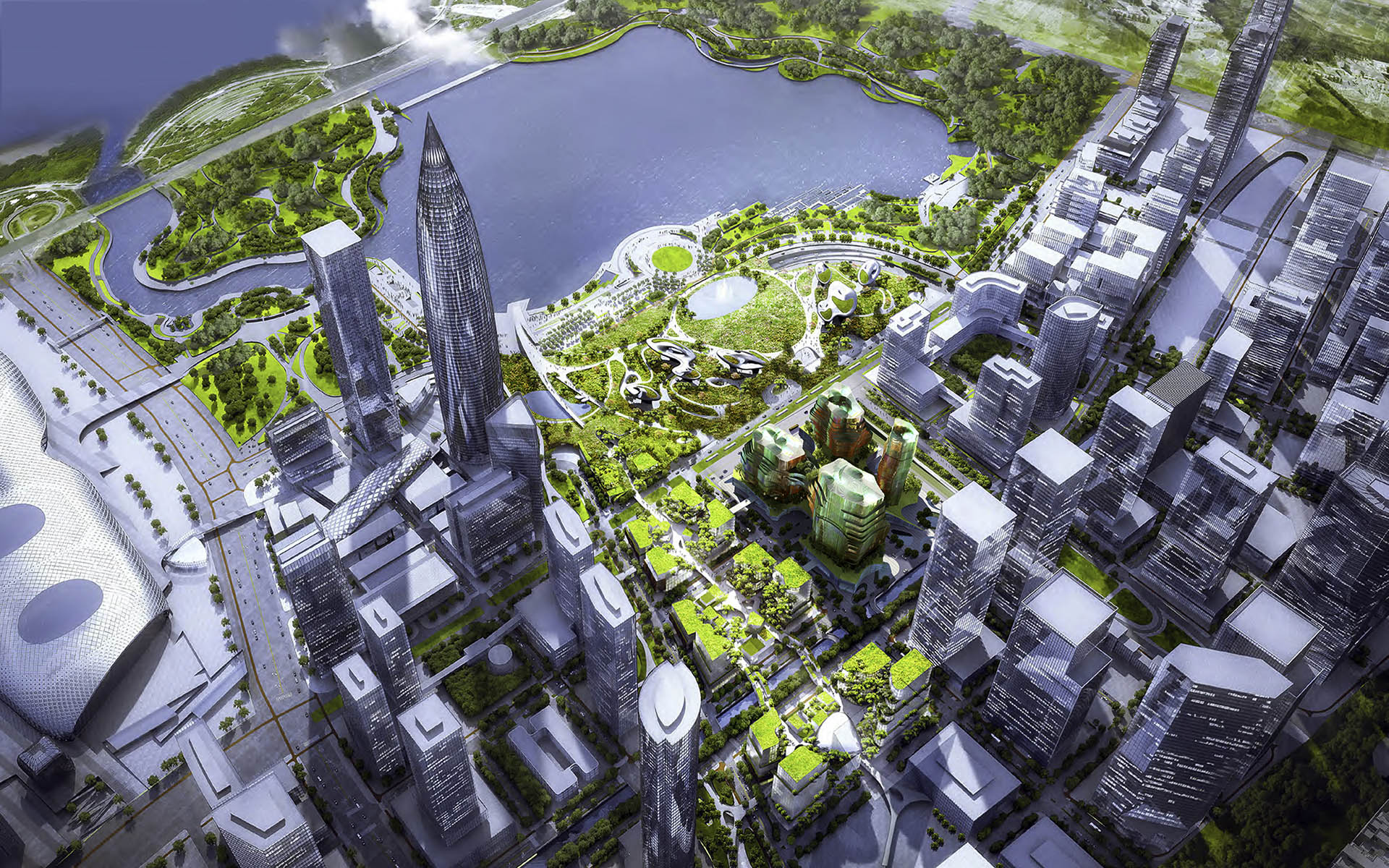
Tenchuang HQ Urban Plan is the urban design component of the Tenchuang headquarters project in Shenzhen Bay, China. While the Tenchuang Towers proposal develops the headquarters buildings and hotel, this project focuses on the wider site strategy, public realm, landscape structure and relationship between the new campus and the surrounding city.
The urban plan organises a mixed-use headquarters environment for Tenchuang, integrating offices, laboratories, studios, exhibition spaces, retail, entertainment functions, hospitality and public programmes within a coherent urban framework. The proposal treats the headquarters not as an isolated corporate object, but as a porous urban campus connected to Shenzhen Bay Park and the wider metropolitan landscape.
The project develops a layered ground condition with public routes, landscape spaces, shared amenities and programme distribution arranged to support movement, visibility and interaction across the site. The podium and park landscape create a civic base for the headquarters, linking corporate workspaces with public life and environmental performance.
Together, the urban plan and tower proposal explore how a contemporary headquarters can operate simultaneously as workplace, public destination, ecological landscape and urban infrastructure.


