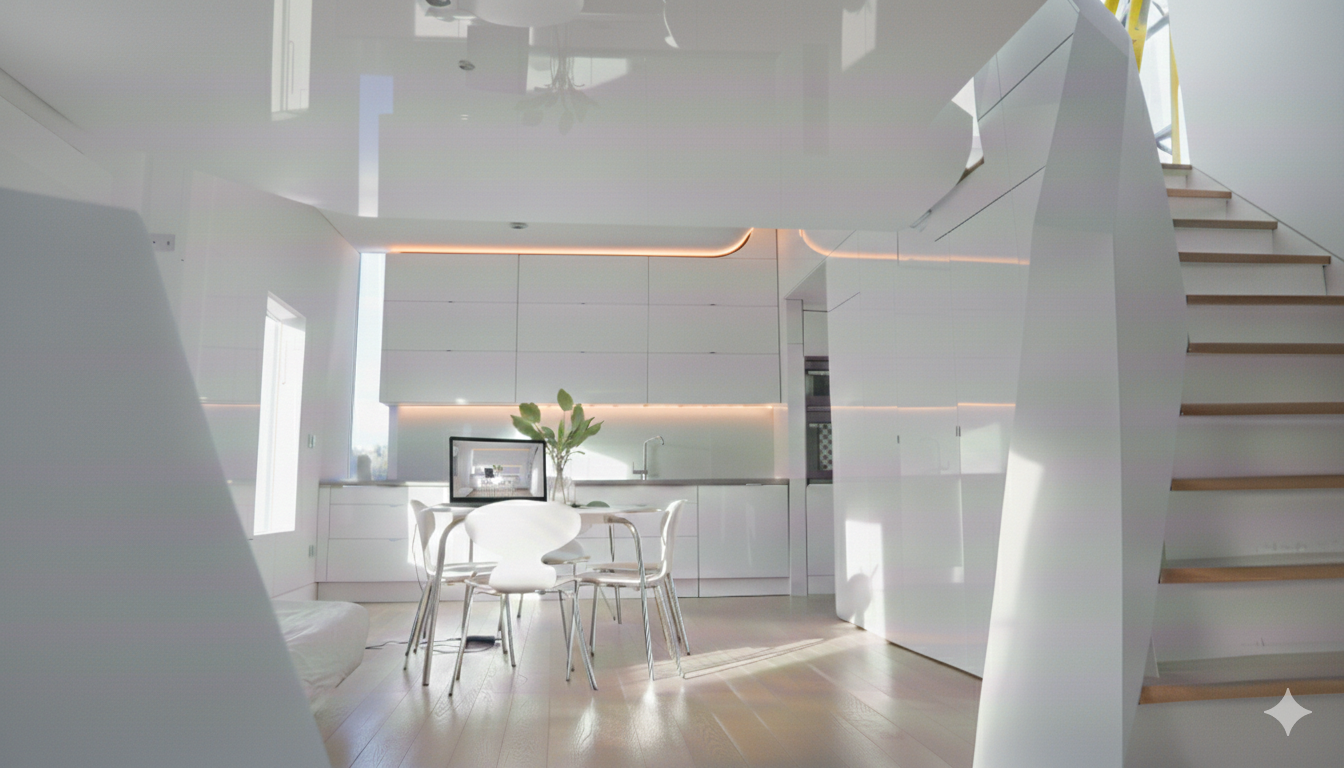
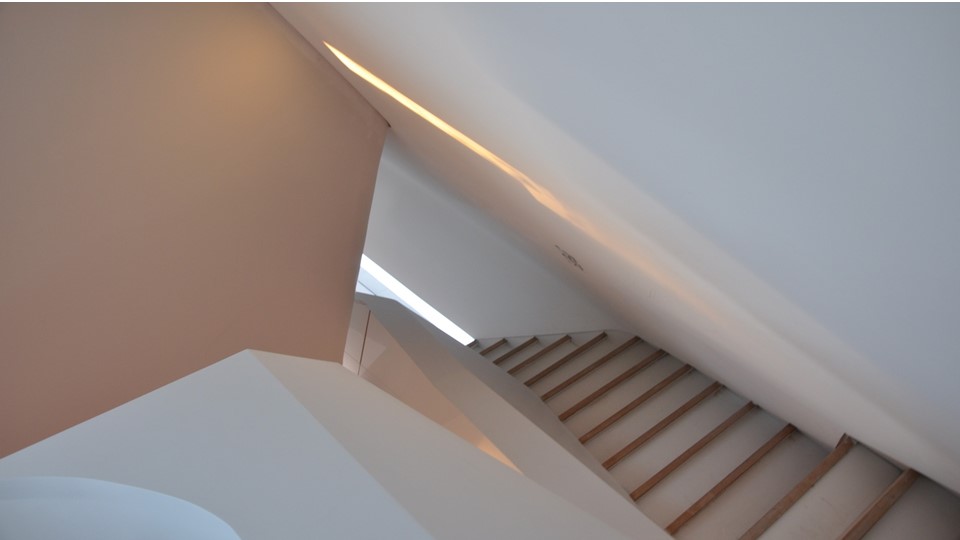
a CNC-fabricated timber conversion transforming a compact Hackney maisonette into a sectional roof landscape

| Project Location | Hackney, London, United Kingdom |
| Site Context | Existing maisonette terrace conversion in the de Beauvoir conservation area |
| Project Type | Residential conversion, maisonette transformation, CNC-fabricated timber insertion, compact housing, roof garden |
| Project Description | Nested House V1.12 is the transformation of an existing 60 sqm maisonette terrace conversion using a single digital three-dimensional model, CNC-fabricated laminated plywood ribs and bespoke interior elements inserted into the old building shell. |
| Client | Private client |
| Architect | UFO Architecture |
| UFO Architecture Team | Jonas Lundberg, Eduardo Barata, Dirk Anderson, David Cole |
| Building Surveyor | Galbraith Hunt & Pennington |
| Structural Engineer | Galbraith Hunt & Pennington |
| Structural Concept Design | Daniel Bosia |
| Project Status | Completed |
| Awards / Recognition | RIBA Future House 2005 finalist |
| Project Completion | 2005 |
| Project Size | 60 sqm |
| Construction System | 5-layer laminated 18 mm plywood ribs, CNC fabrication and steel frame support to hold back the existing external walls |
| Programme | Maisonette, interior reorganisation, shifted bedroom nests, bespoke storage, split-level roof garden, private outdoor rooms and city views |
| Design Focus | CNC timber conversion, compact residential space, yacht-inspired storage, conservation context, bedroom nests, sectional objects, continuous roof terrace and London skyline views |
| Digital Strategy | The project uses one digital three-dimensional model as the single source of project information, coordinating spatial organisation, CNC fabrication, construction information and design development. |
| Fabrication Strategy | The interior structure is fabricated from CNC-cut laminated plywood ribs that are inserted into the existing terrace shell, creating a precise spatial framework for occupation, storage and roof access. |
| Roof Garden Strategy | The tops of the sectional timber objects form a split-level roof garden, creating one intimate lower garden room and one higher terrace with views towards the London skyline. |
| Interior Strategy | The compact interior uses bespoke storage, fitted elements and yacht-inspired spatial efficiency, turning structure, furniture, circulation and storage into one integrated domestic system. |
Nested House V1.12 is a small residential conversion in Hackney, London, developed from a single digital three-dimensional model used as the source of all project information. The site is an existing 60 sqm maisonette terrace conversion distributed over three floors in the heart of the de Beauvoir conservation area.
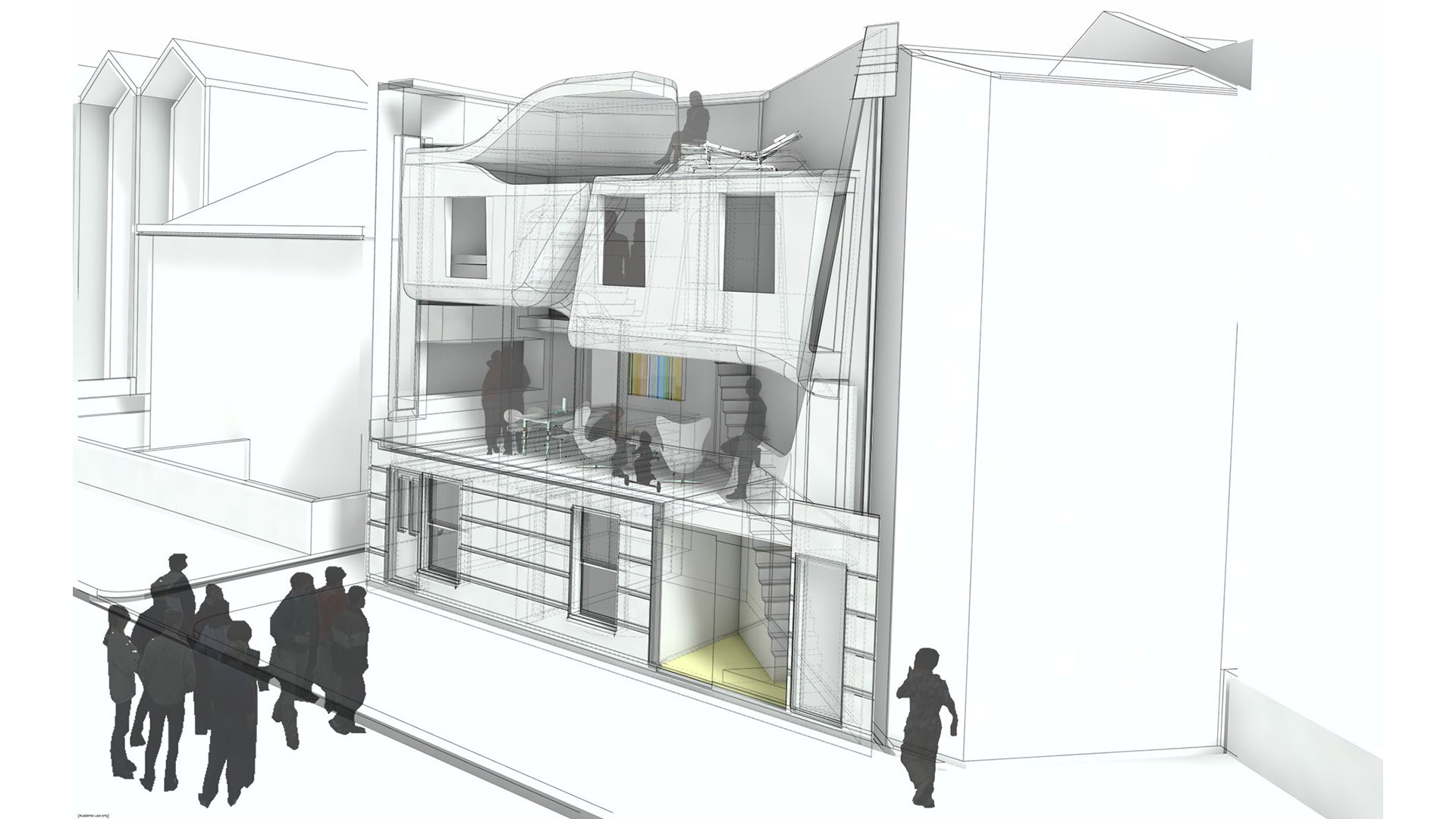
Because of the restrictions of the conservation area, the design deliberately concentrates on the reorganisation of the interior and its relationship to a split-level roof garden. The external treatment only hints at the less orthodox spatial arrangement inside, where a new CNC-fabricated timber structure is inserted into the old terrace shell.
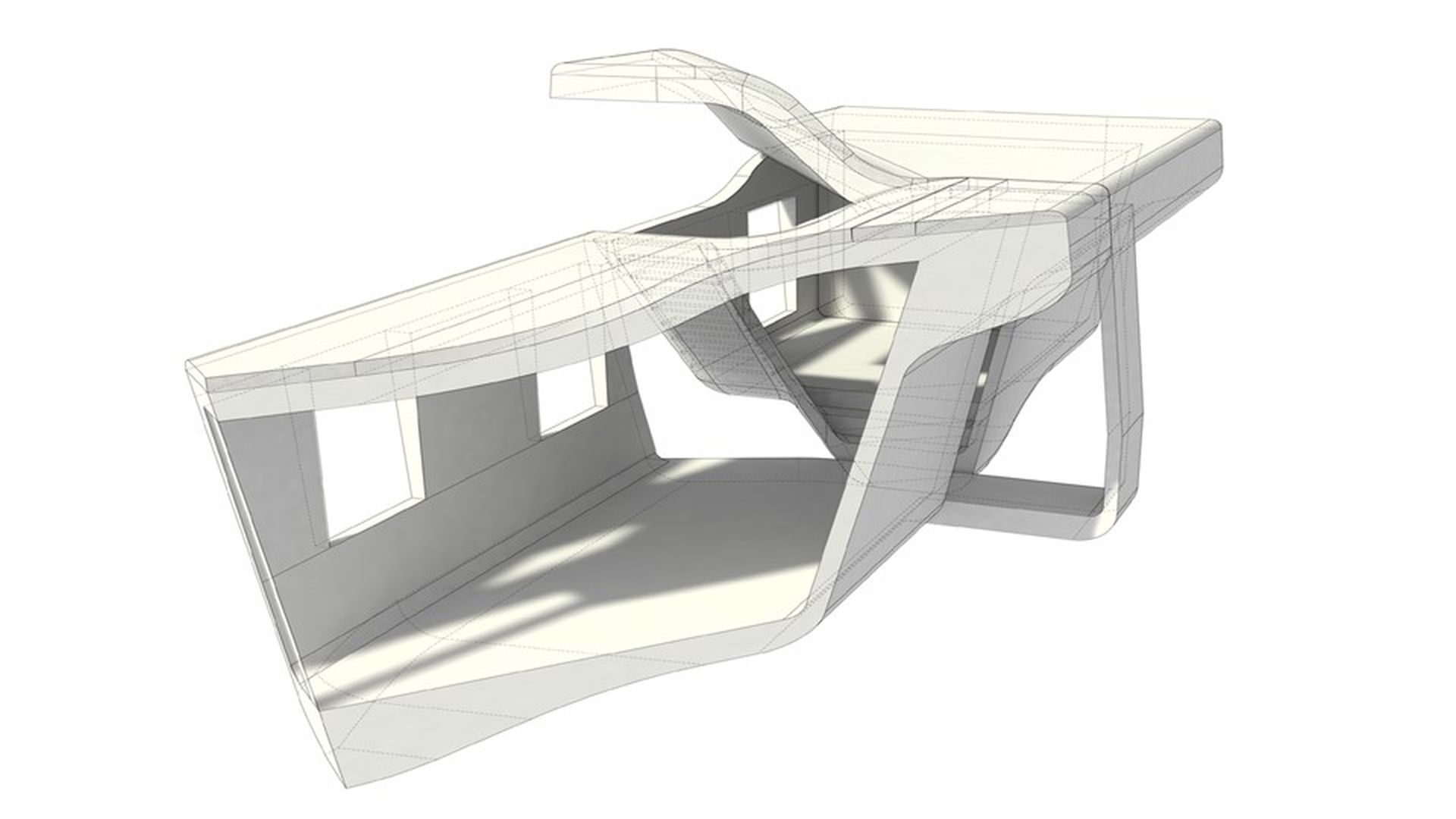
The project is fabricated from a series of 5-layer laminated 18 mm plywood ribs, cut using CNC technology and fitted within the existing building. The structural concept design was developed with Daniel Bosia, while Galbraith Hunt & Pennington acted as building surveyor and structural engineer. A steel frame holds back the external walls, allowing the timber sectional objects to define the new interior organisation.
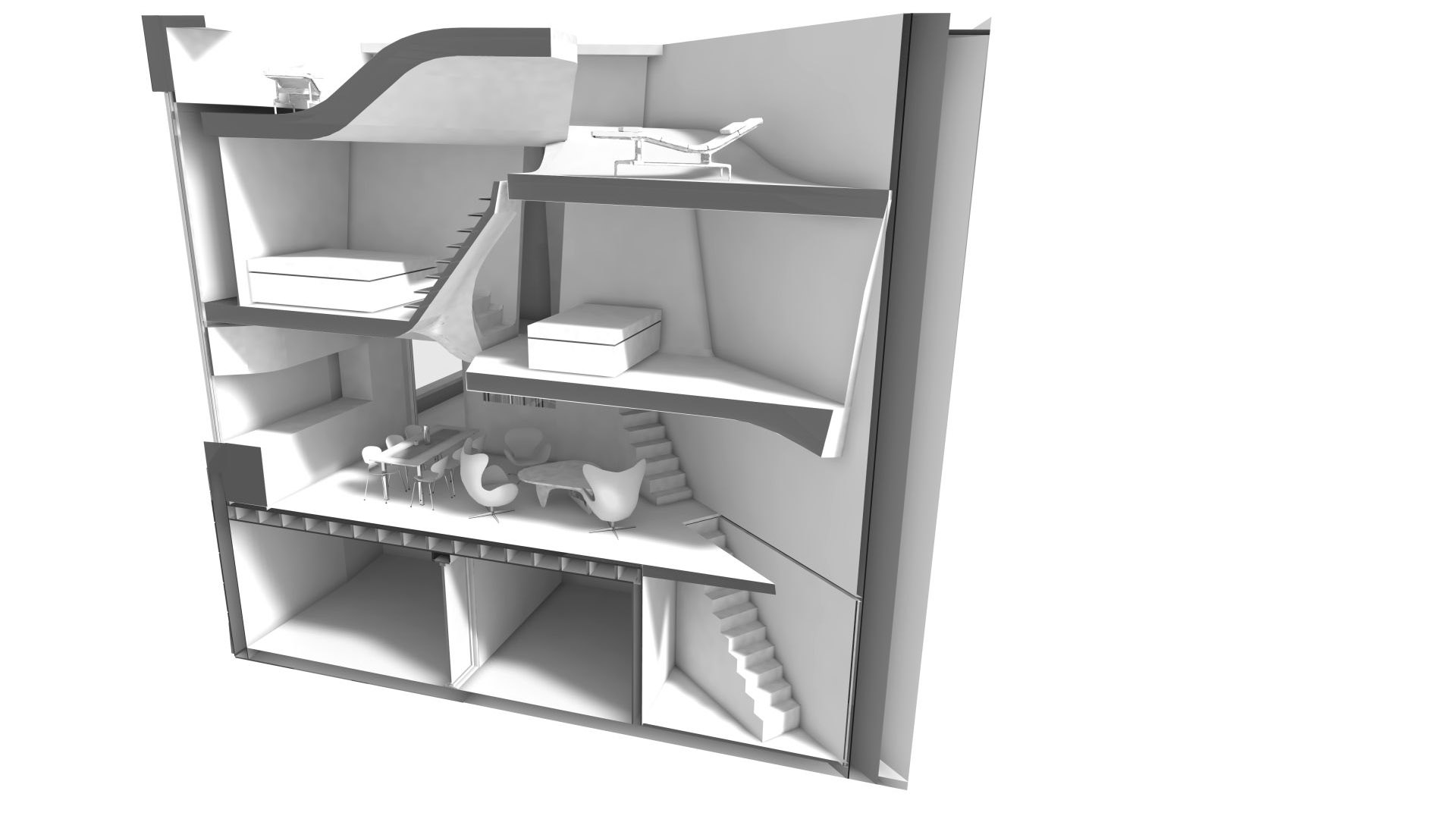
The sectional objects are related to one another as a continuous inhabited system. Their tops form a singular split-level roof terrace, while below they organise bedrooms, storage, circulation and compact living spaces. The roof garden creates two distinct outdoor conditions: one lower, more intimate garden room, and one higher terrace with open views towards the skyline of London.
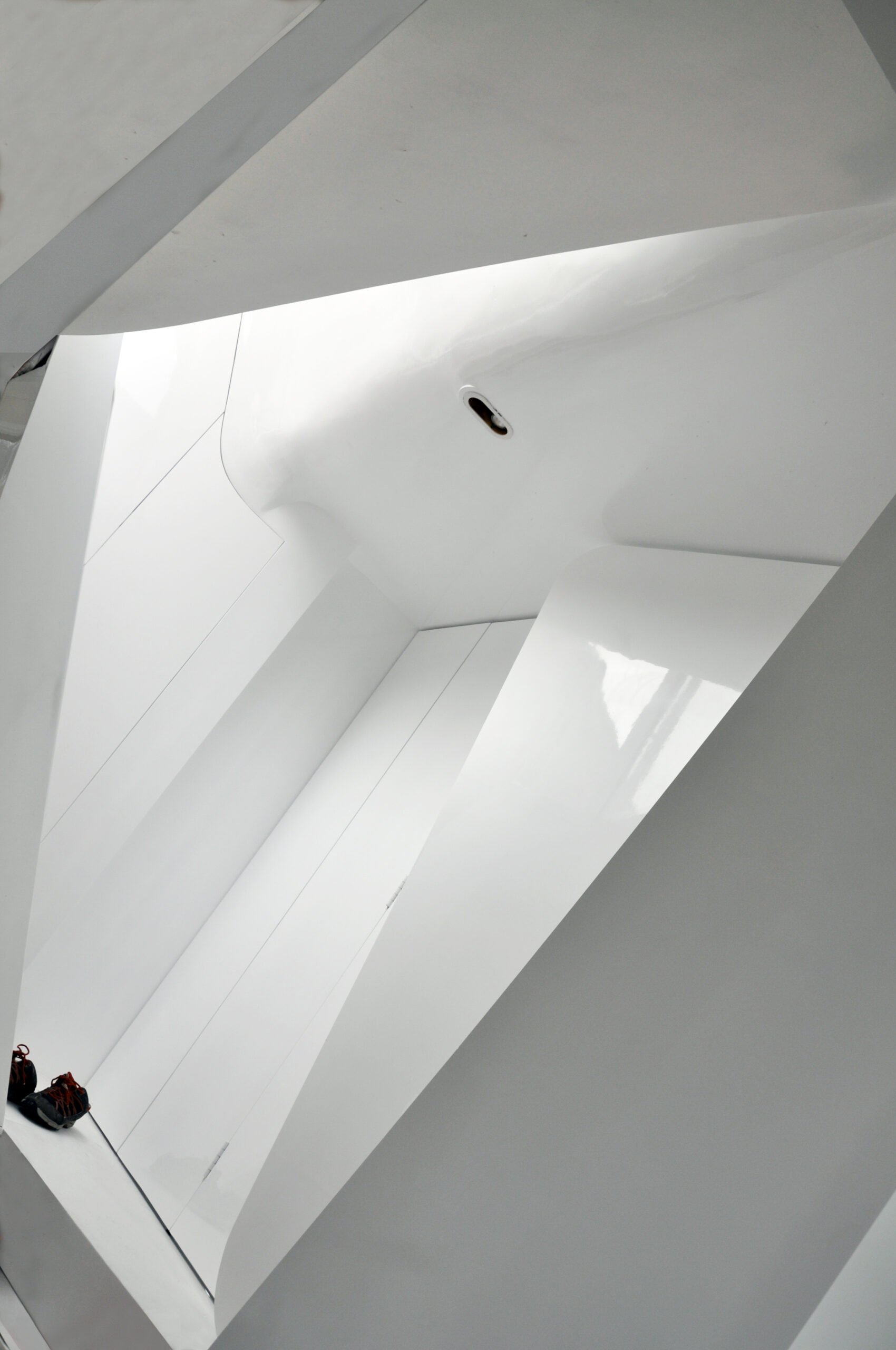
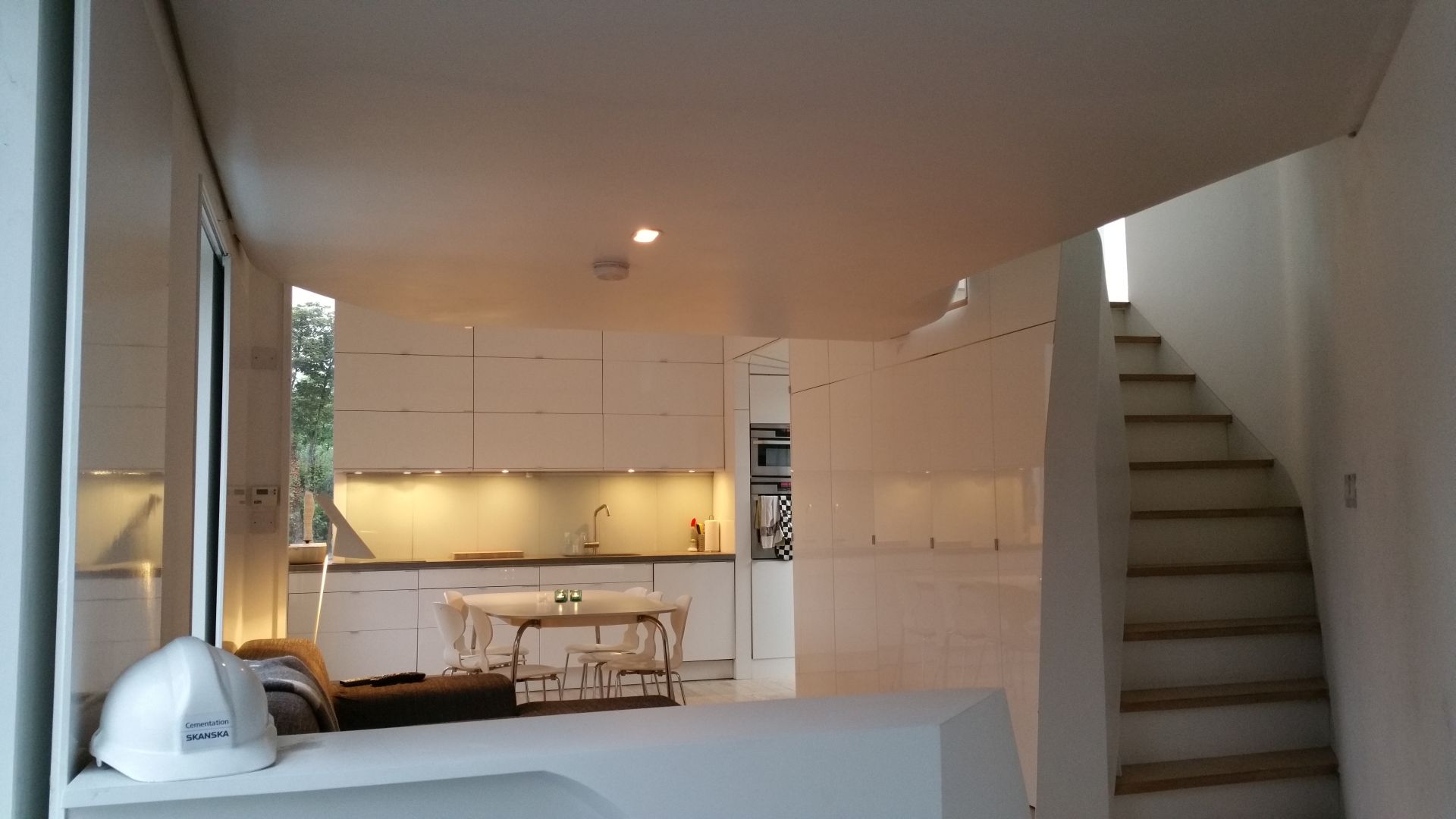
The interior is extremely compact and highly integrated, with bespoke storage and fitted elements taking inspiration from yacht design. Every available surface is used carefully, turning the small maisonette into an intensified domestic landscape where structure, furniture, storage and circulation become part of the same architectural system.
Nested House V1.12 explores how digital modelling, CNC fabrication, laminated plywood construction and sectional spatial organisation can transform a constrained urban dwelling into a precise and inhabitable architectural insertion.