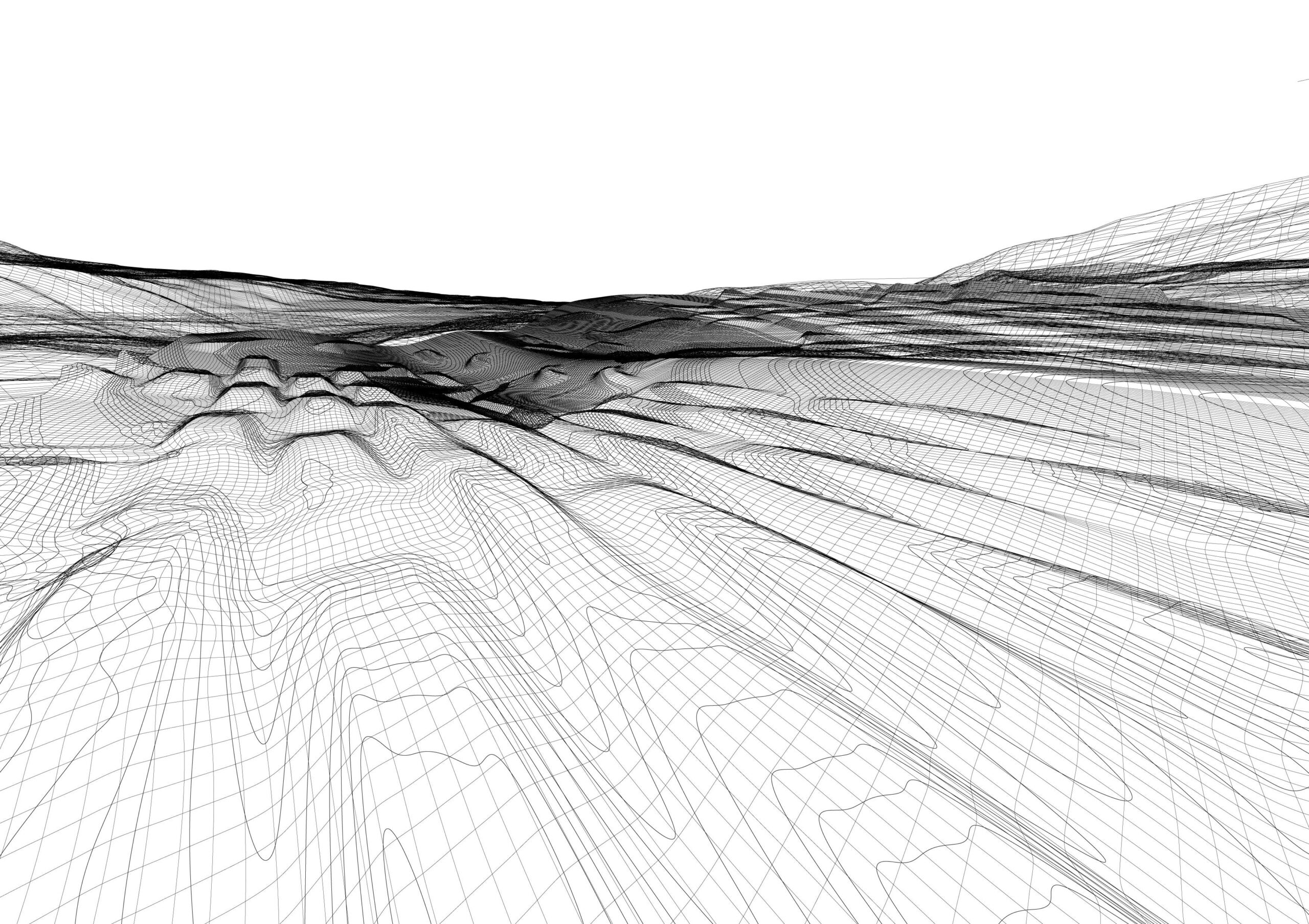
a 1st prize landscape and resort strategy for rebuilding within the volcanic terrain of Mount Etna


| Project Location | Linguaglossa, Etna North, Sicily, Italy |
| Project Type | Landscape design, resort strategy, volcanic terrain, public infrastructure, competition-winning proposal |
| Project Description | 1st prize invited competition proposal for a landscape and resort strategy on Mount Etna, developed for the site of a ski resort destroyed by the 2001 eruption. |
| Architect | UFO Architecture |
| Project Status | 1st prize winner, invited competition – partially realised |
| Project Duration | 2003 |
| Collaborators | INGV, Civil Defence and local authorities |
| Programme | Volcanic landscape strategy, resort infrastructure, roads, parking, lightweight removable buildings, public access and terrain modification |
| Design Focus | Volcanic landscape, lava-flow mitigation, dagalas, sculpted terrain, removable resort buildings, public infrastructure, risk adaptation and extreme landscape design |
| Landscape Strategy | The project reshapes the topography to increase surface friction and divide potential lava flows into smaller streams, creating protected islands or dagalas within the lava field. |
| Resilience Strategy | The resort is conceived as a combination of sculpted volcanic terrain and lightweight portable buildings that can be removed in the event of a future eruption. |
| Realised Elements | Parts of the public infrastructure, including roads and parking, were realised. |
Mount Etna – The Last Resort is UFO Architecture’s 1st prize proposal for a new resort landscape at Linguaglossa on the northern slopes of Mount Etna in Sicily. The project was developed for the site of a ski resort destroyed by the 2001 eruption, transforming the problem of volcanic risk into a landscape and infrastructure strategy.
The proposal organises the landscape and topography to reduce the likelihood that the resort and its infrastructure would be destroyed by a future eruption. Rather than resisting the volcano through a single defensive structure, the project works with the behaviour of lava flows, modifying the terrain to increase surface friction and divide the flow into smaller streams.
The design uses sculpted landforms to create islands within the lava field, known as dagalas. These landscape formations become both protective devices and spatial elements, structuring the resort as a terrain of routes, edges, sheltered areas and public infrastructure.
The resort is conceived as a combination of permanent landscape intervention and lightweight portable buildings. The buildings can be removed in the event of a new eruption, allowing the project to adapt to the extreme and unstable conditions of Mount Etna rather than pretending they can be fully controlled.
The project was developed in collaboration with INGV, the Civil Defence and local authorities. Parts of the public infrastructure, including roads and parking, were realised, making the project both a speculative landscape strategy and a partially implemented response to volcanic terrain.