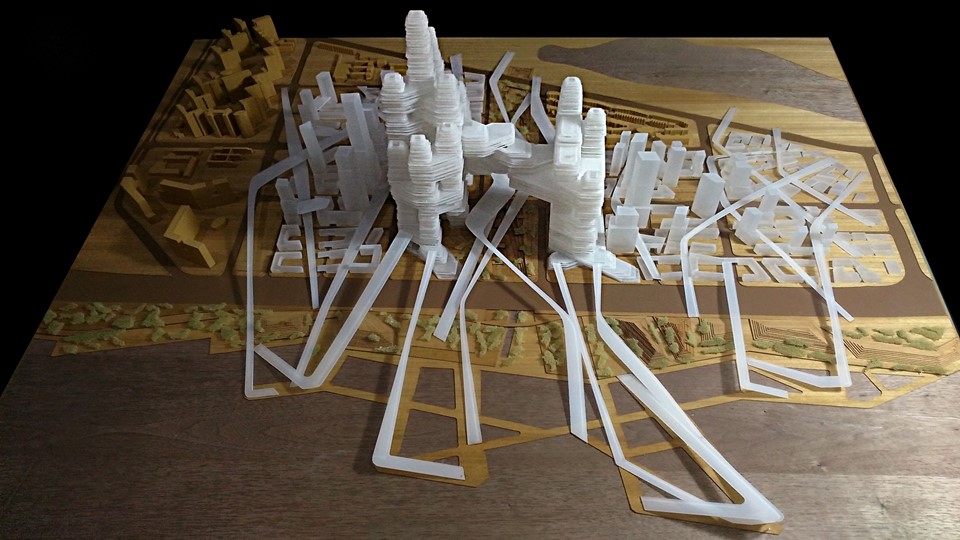
top-prize in architectural competition for a regenerative vertical city village for Shenzhen Bay


| Project Location | Shenzhen Bay, Shenzhen, China |
| Project Type | Vertical city, super-tall tower, financial district, urban design, regenerative architecture |
| Project Description | Top-prize-winning proposal for Shenzhen Bay Super City, a 170-hectare financial district developed as a hyper-dense, three-dimensional city and interconnected mega-structure rising 680 metres into the sky. |
| Competition | Shenzhen Bay Super City Open Architectural Competition |
| Competition Result | Top prize awarded |
| Project Status | Prize awarded; project suspended |
| Architect | UFO Architecture and CR-Design |
| UFO Architecture Team | Jonas Lundberg, Arjan Scheer, Eddy He, Kang Chung |
| Collaborators | Chalmers University of Technology: Karin Hedlund, Lukas Nordström, Pedram Seddighzadeh |
| Project Partner | CR-Design |
| Project Area | 170 ha district; approx. 1.7 million sqm |
| Project Height | 680 m, 580 m and 480 m |
| Publications | ArchDaily — Cloud Citizen awarded joint top honors Designboom — Cloud Citizen Shenzhen Super City Competition |
| Design Focus | Vertical urbanism, hyper-density, regenerative design, sky parks, financial district, public space, ecological infrastructure, renewable energy, rainwater harvesting, carbon storage and air filtration |
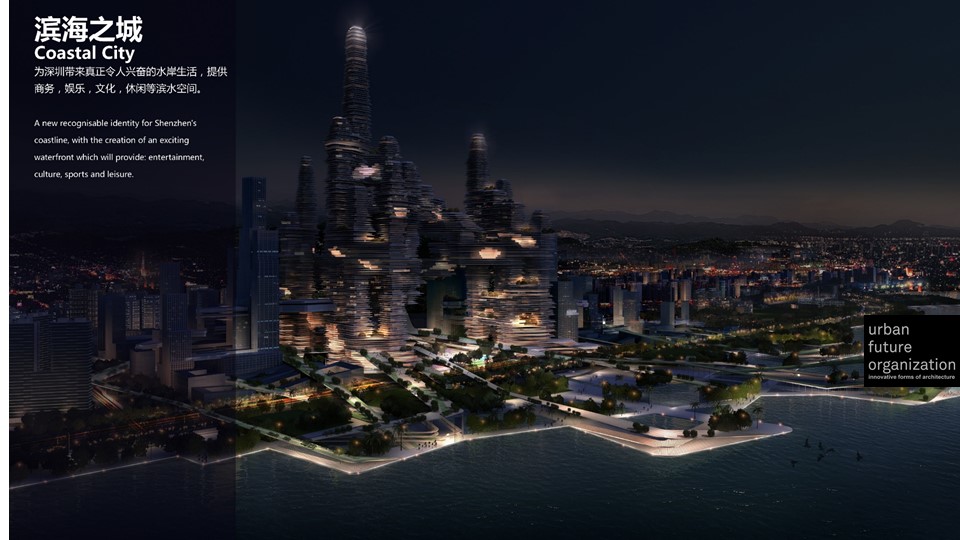
Cloud Citizen is a top-prize-winning proposal for Shenzhen Bay Super City, a 170-hectare financial district in Shenzhen, China. The project was developed by UFO Architecture and CR-Design, with collaborators from Chalmers University of Technology contributing expertise in design computation and regenerative design.
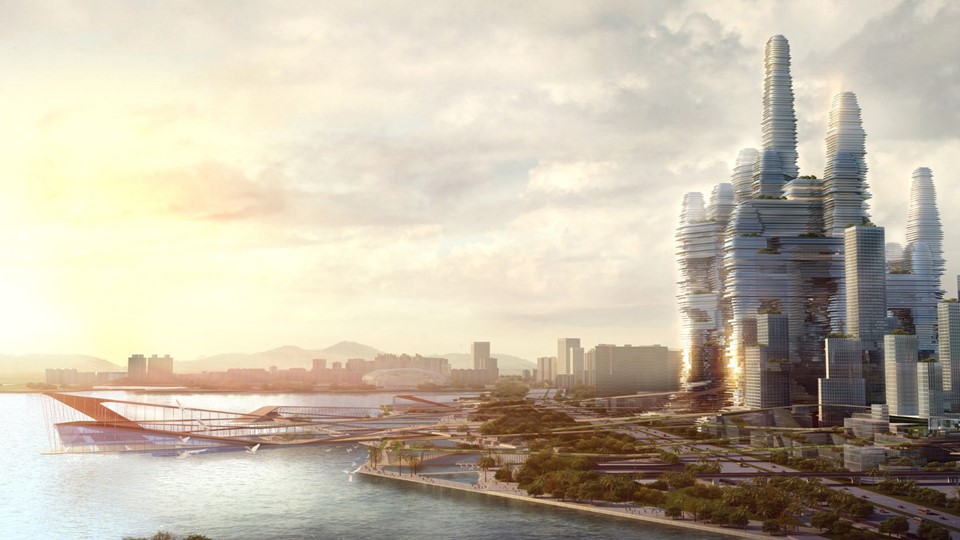
The proposal reimagines the high-rise financial district as a hyper-dense, three-dimensional city. Rather than a collection of isolated towers, Cloud Citizen is conceived as an interconnected mega-structure rising 680 metres into the sky, combining offices, cultural programmes, commercial areas, leisure spaces and suspended public landscapes.
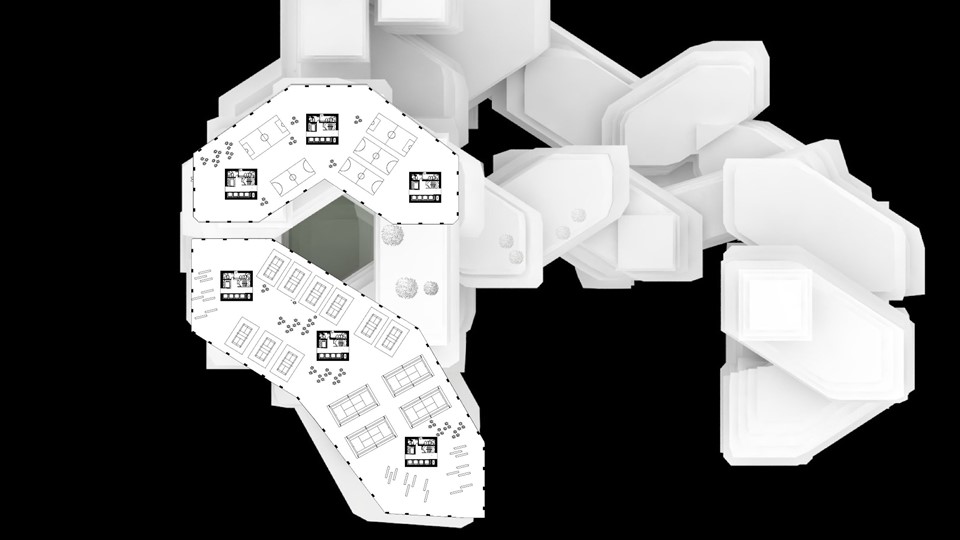
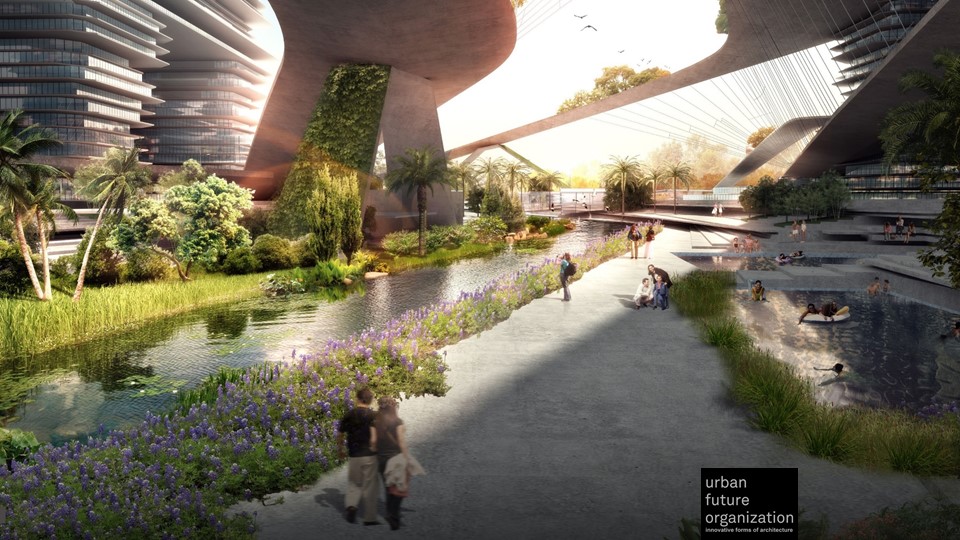
The project challenges conventional models of urban densification by creating a continuous vertical metropolis where public space, infrastructure, landscape and working environments are integrated into one spatial system. Sky parks act as green lungs and social condensers, connecting different levels of the city while supporting new forms of work, movement, public life and ecological performance.
Cloud Citizen was designed as both an iconic skyline proposal and an urban strategy for regenerative development. The project harvests rainwater, produces energy from sun, wind and algae systems, stores carbon, filters particles from the air and incorporates habitats for wild plants, food production and everyday access to nature within the structure.